islamic art of mirror work
Read about the history and beauty of Islamic mirror work, from its origins in Iran to its more subtle use in traditional homes. See pictures showing how this art continues to inspire modern interior.


The history and beauty of Islamic mirror work (Āina-kāri)
When you step into a mosque or palace in Iran, you may find thousands of reflections of yourself dancing across the walls and ceilings. This art is known as Āina-kāri—the Islamic art of mirror work. Found in many historic buildings across Iran, it is a combination of craftsmanship, geometry, and light that can really bring that WOW factor into interior architecture.
The origins of mirror work in Islamic Persia
Mirror work in Persia dates back to the Safavid era (16th–18th century) when Persian architects and artisans began using pieces of thin mirror glass in interior decorations. Inspired by Islamic geometric patterns, they arranged small pieces of mirror into mosaics, creating an effect as light reflected across the surfaces.
The use of mirror work was not just about decoration; it also had a symbolic meaning. Light holds deep significance in Islamic culture (Noor), often representing divine presence. By covering mosques and palaces with mirror mosaics, artisans created an atmosphere that created a spiritual experience.
Geometry and light: the foundation of Islamic mirror art
Islamic art is deeply rooted in geometry, and mirror work follows this tradition. The designs are carefully planned using mathematical precision, often featuring tessellations, stars, and arabesques. These patterns are not merely decorative—they reflect a philosophy of infinite beauty and order.
The way light interacts with these mirrored surfaces enhances the effect further. Whether lit by sunlight during the day or candlelight at night, mirror work creates a shifting ambiance. In grand mosques such as Shah Cheragh in Shiraz, the mirror mosaics transform the entire space, covering visitors in reflections.
Famous examples of Āina-kāri in Iran
Iran is home to some of the most well-known examples of Islamic mirror work, including:
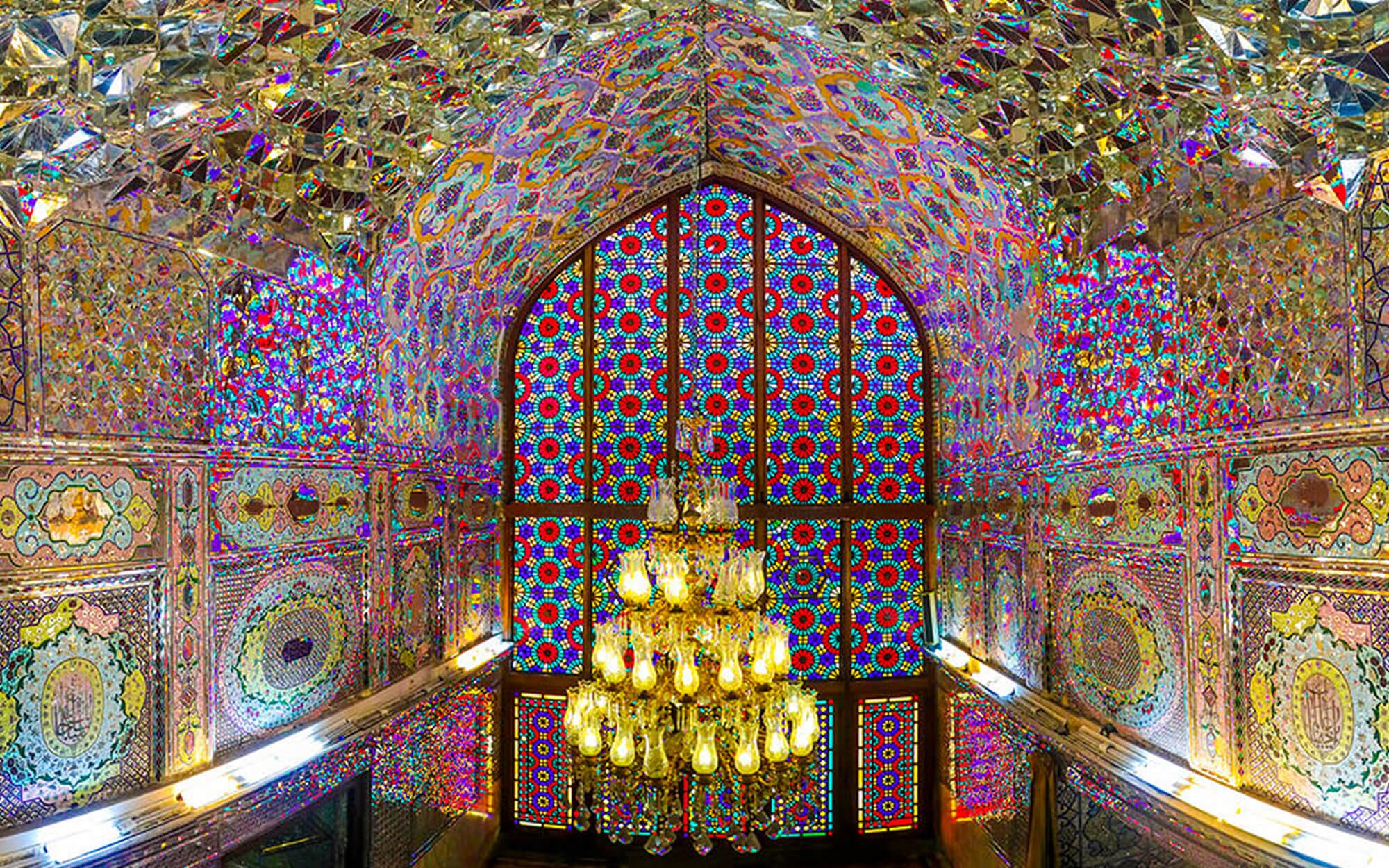
- Shah Cheragh, Shiraz – A mausoleum where every inch of the interior is covered in tiny mirror pieces, reflecting light in different ways.
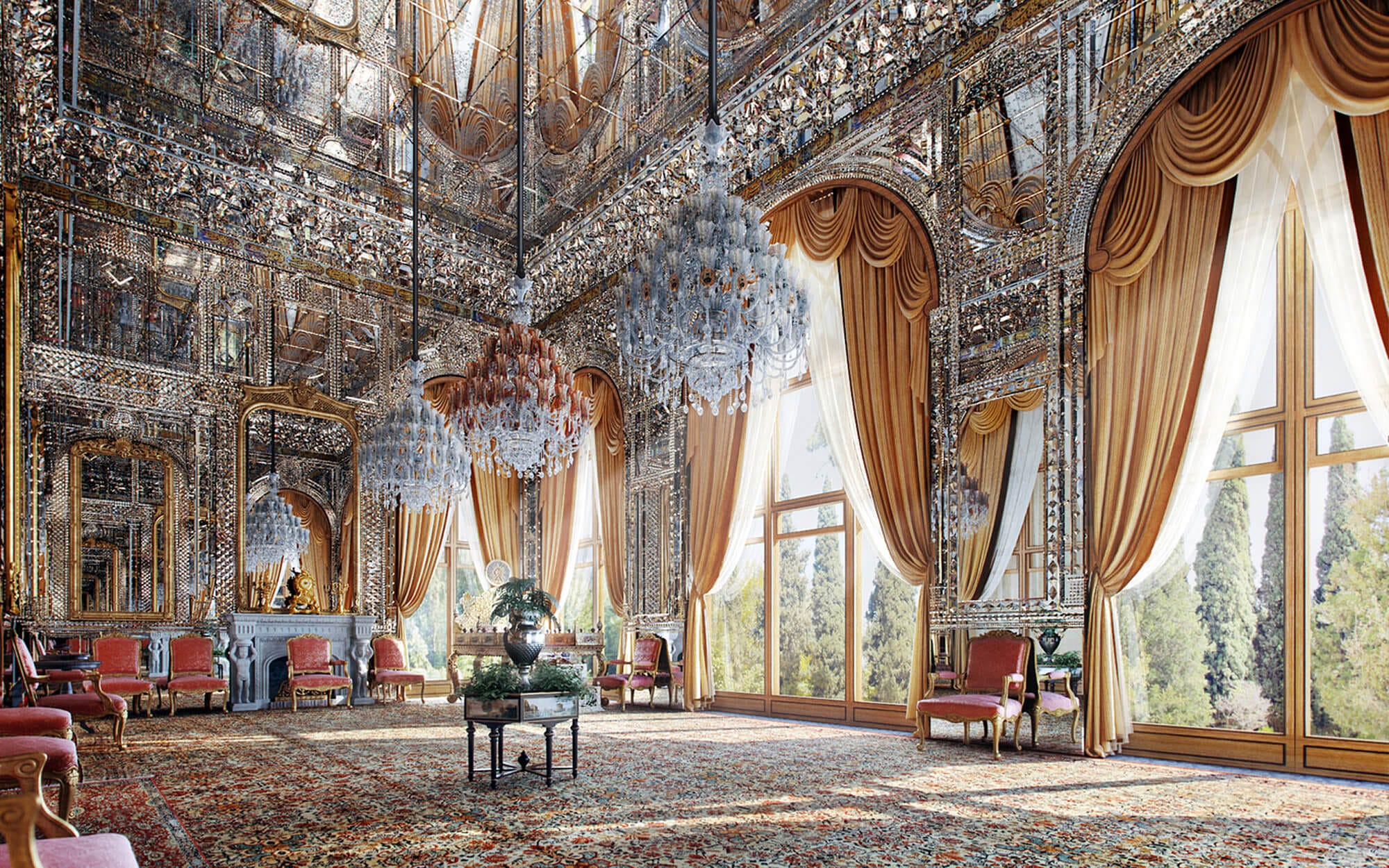
- Golestan Palace, Tehran – A UNESCO-listed historical complex with rooms decorated in mirror mosaics.
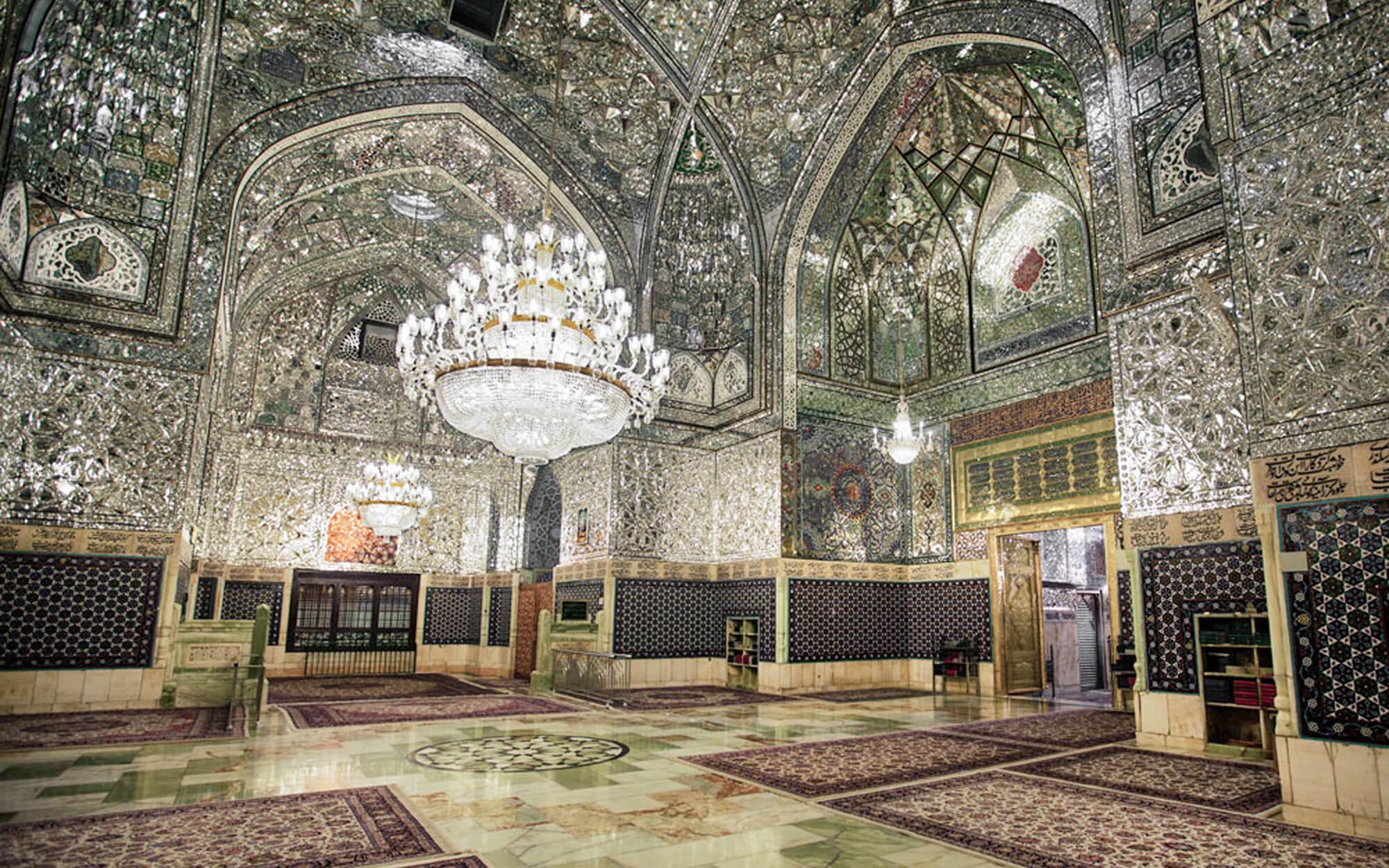
- Imam Reza Shrine, Mashhad – One of the holiest sites in Iran, this grand shrine is dedicated to Imam Reza, the eighth Shia Imam. The interiors feature magnificent mirror mosaics that create a luminous and spiritual atmosphere.
Mirror work doesn’t always have to be grand
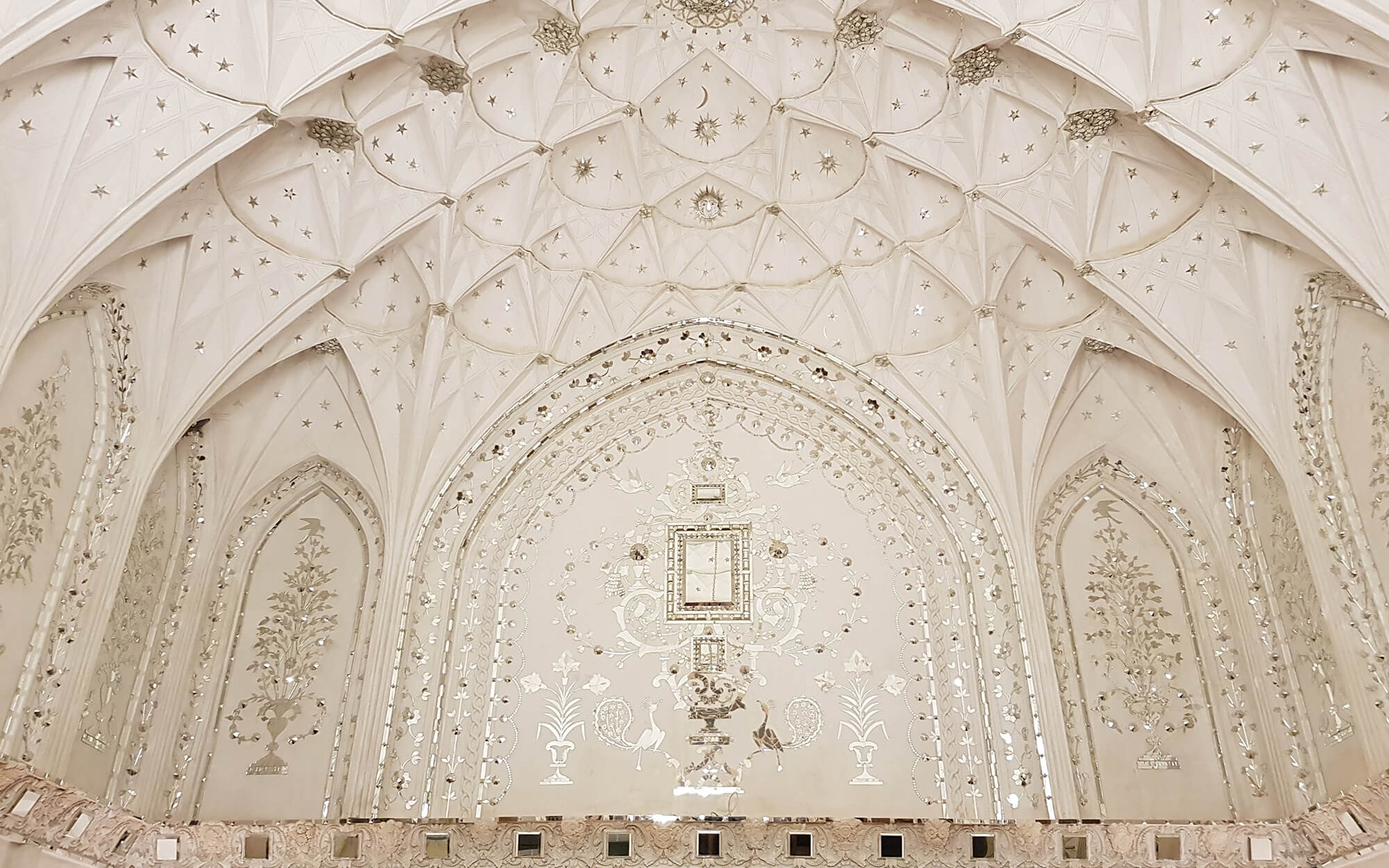
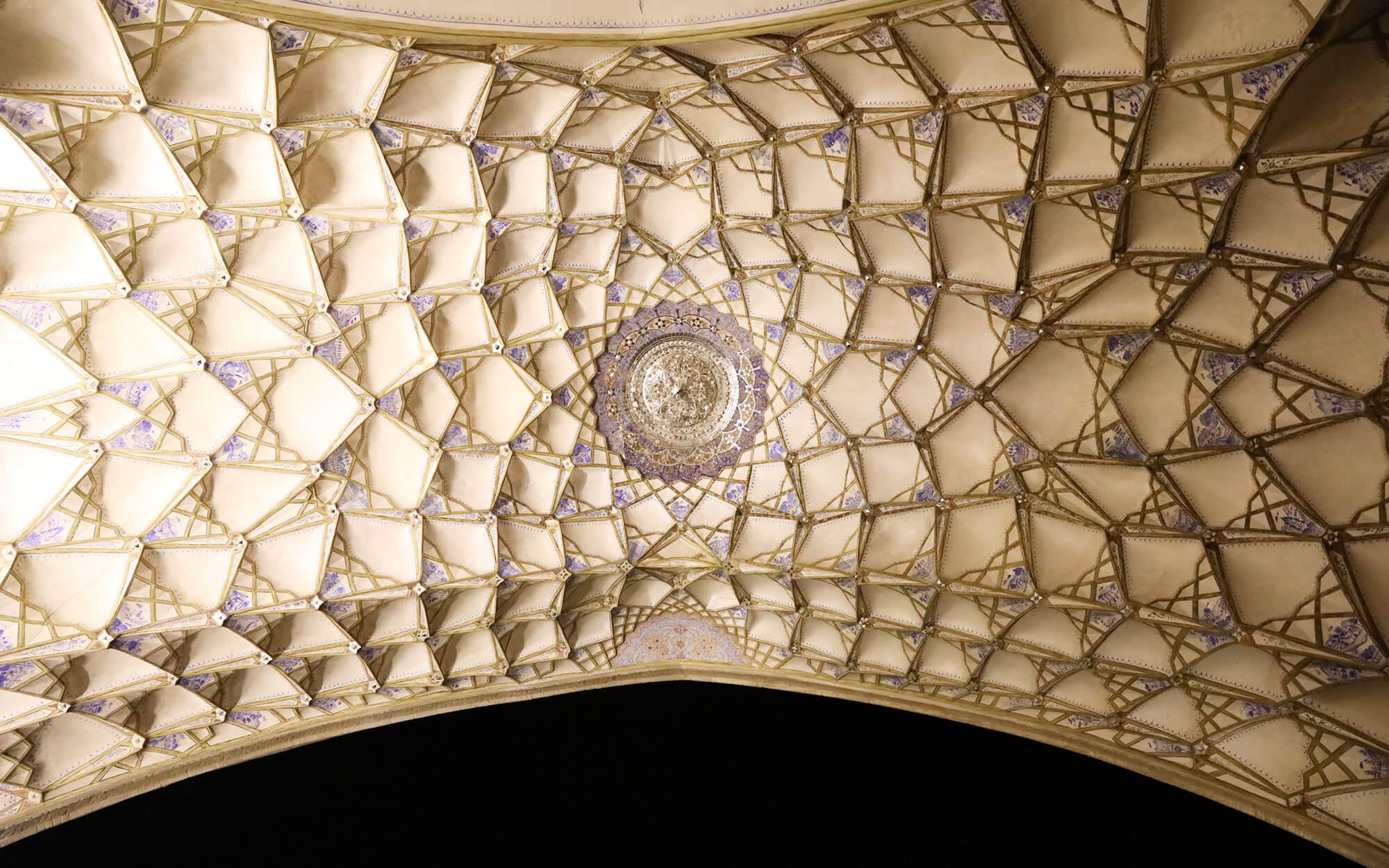
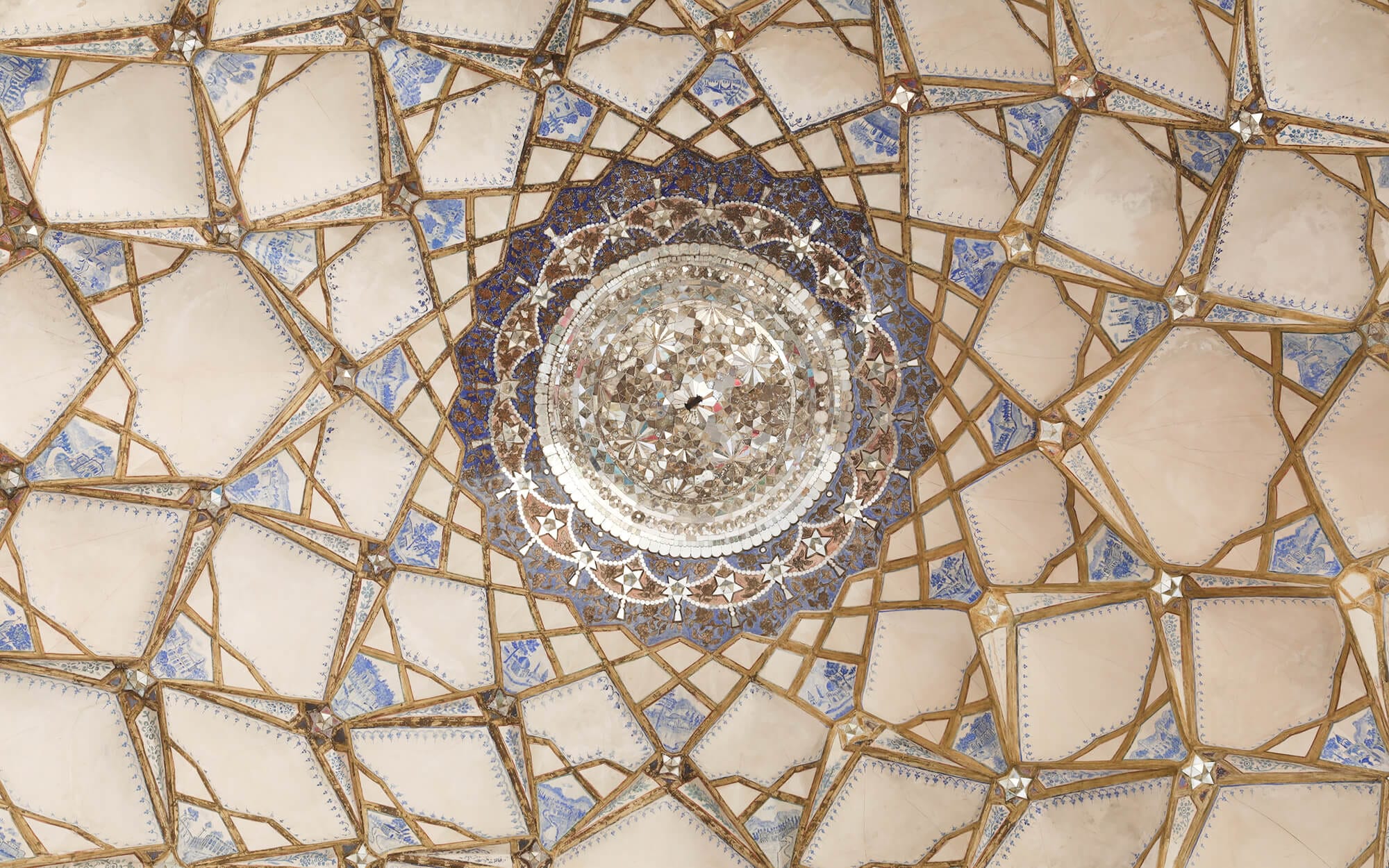
While grand mirror work in mosques and palaces is often the most famous, not all mirror work is so large and exaggerated in scale. During my travels to Kashan and Isfahan in Iran, I visited several more minimal historical khanehs (homes) that featured subtle and understated mirror work.
Many of these homes have been preserved by private individuals under the supervision of Iran's Ministry of Cultural Heritage.
Here are some pictures I took during my last visit to showcase the smaller, yet equally captivating, forms of this beautiful art form.
Modern-day mirror work in contemporary art and home decor
Although rooted in tradition, mirror work continues to inspire contemporary design. From modern art installations to home decor, elements of Āina-kāri are being used in new ways. Today, you can find mirrors shaped into geometric patterns on walls, furniture, and even decorative lamps that bring a touch of Persian style into everyday spaces.
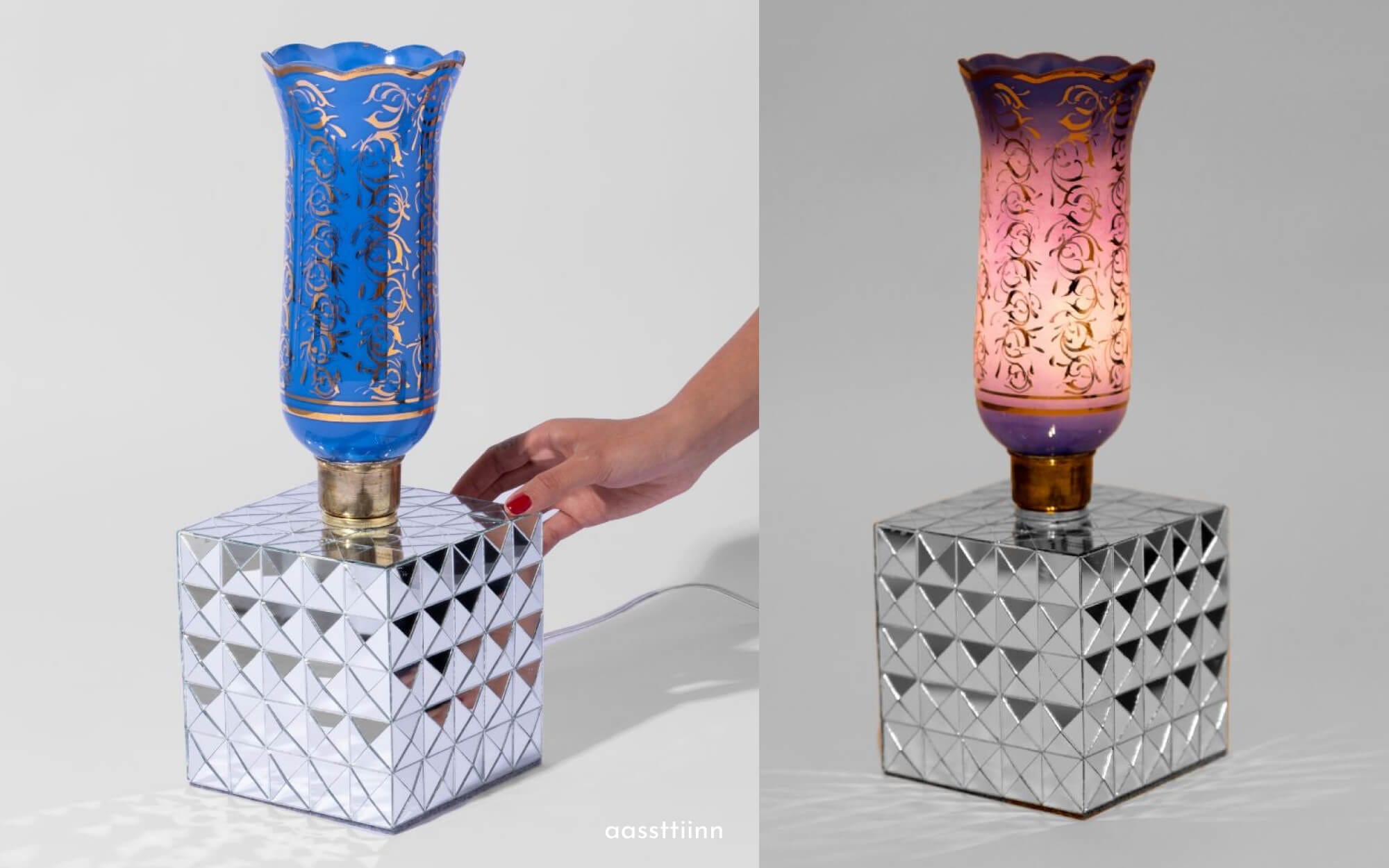
I have a corner in my home that I call Rumi's corner. In this corner, I have placed two table lamps with beautiful mirror work that reflect a warm, calming glow. This space has become my personal retreat for reflection and inspiration, proving how mirror work can still create a special atmosphere in modern interiors.
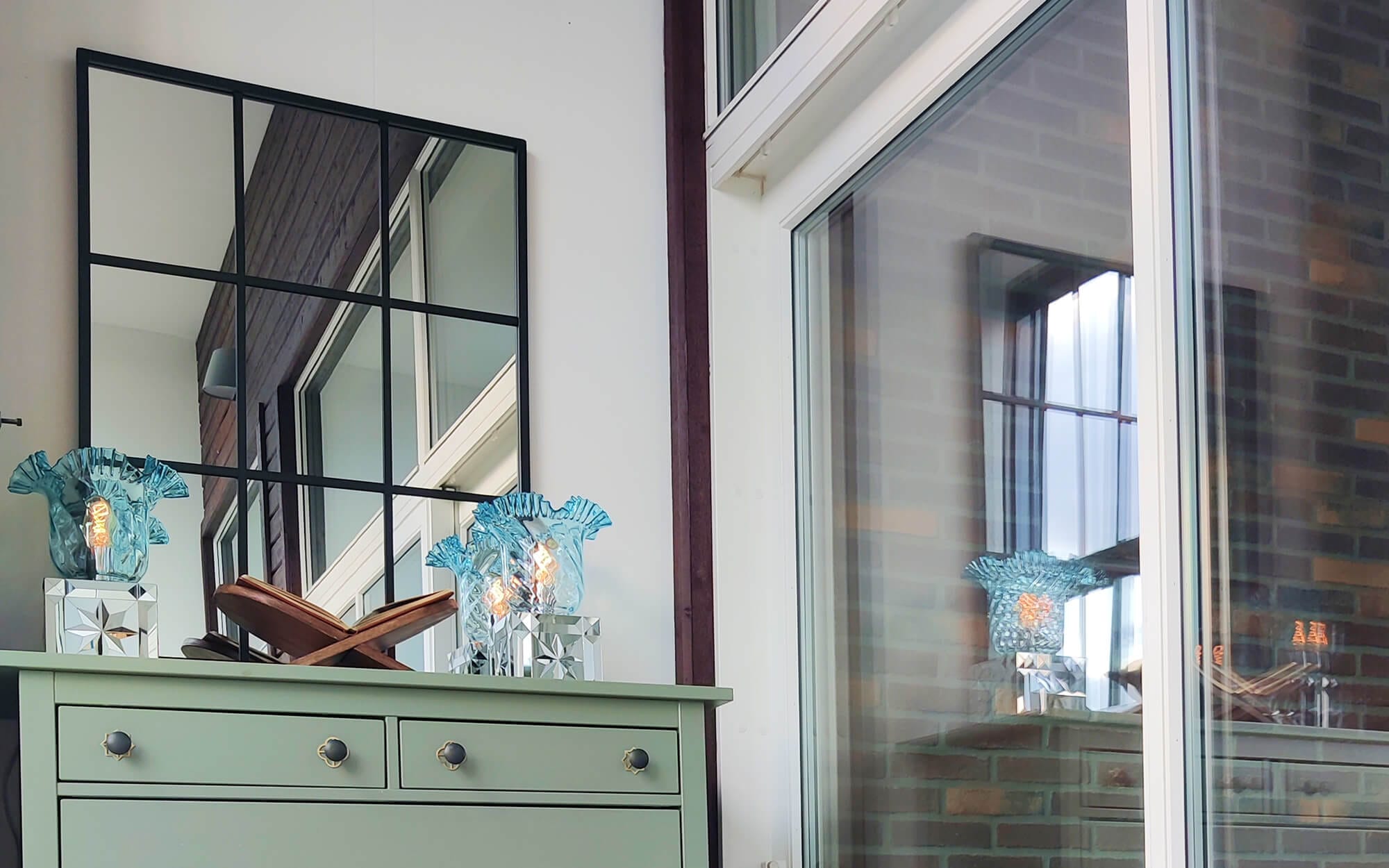
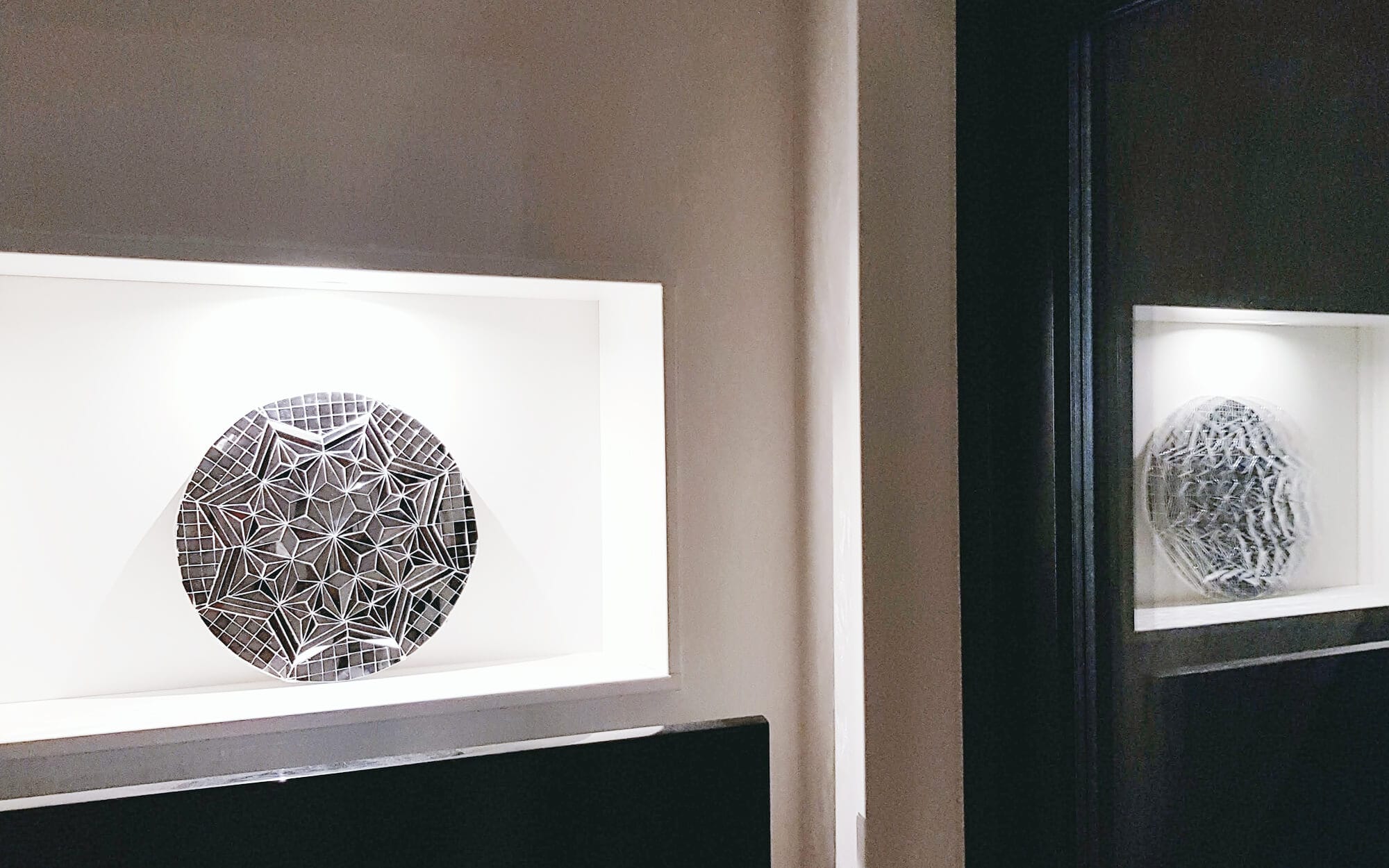
I have another piece of minimal mirror art, a gift from a friend, which I’ve placed on my recessed shelf.
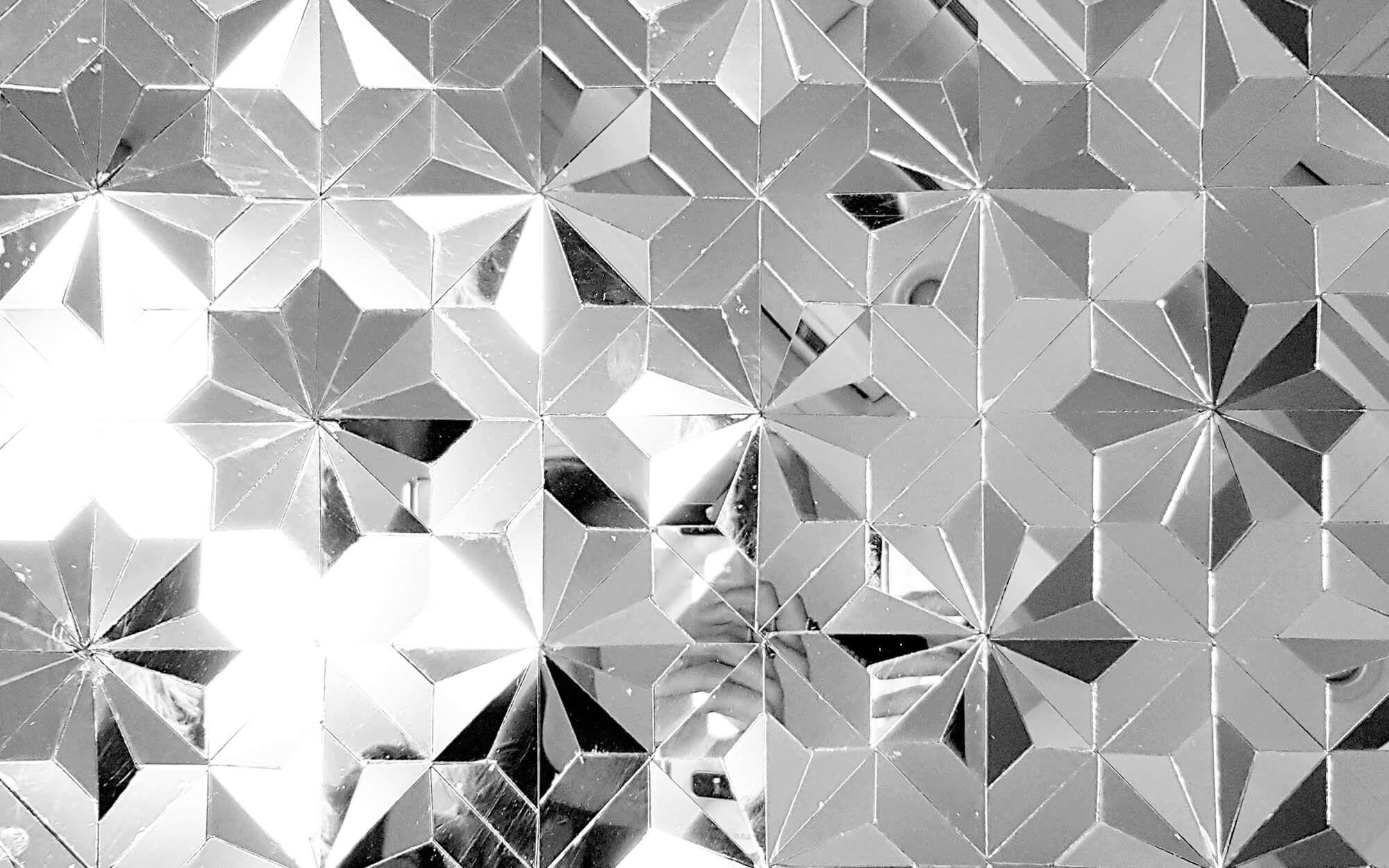
Here is an image of a mirror work table lamps from a contemporary interior shop in Iran called Aassttiinn. This is similar to the ones I bought from a private artisan. Look at the beautiful way mirror art can be brought into your home—the reflection, even when the lamp is turned off, is stunning with just a bit of daylight.
Did you enjoy learning about the shimmering world of Āina-kāri?
If you’re curious about other forms of Persian artistic expression, you can explore Gol o Morgh: the art of the bird and the rose.
 Neda A.